
September 30, 2026 · Admin
Guide to Buying Off-Plan Property in Dubai
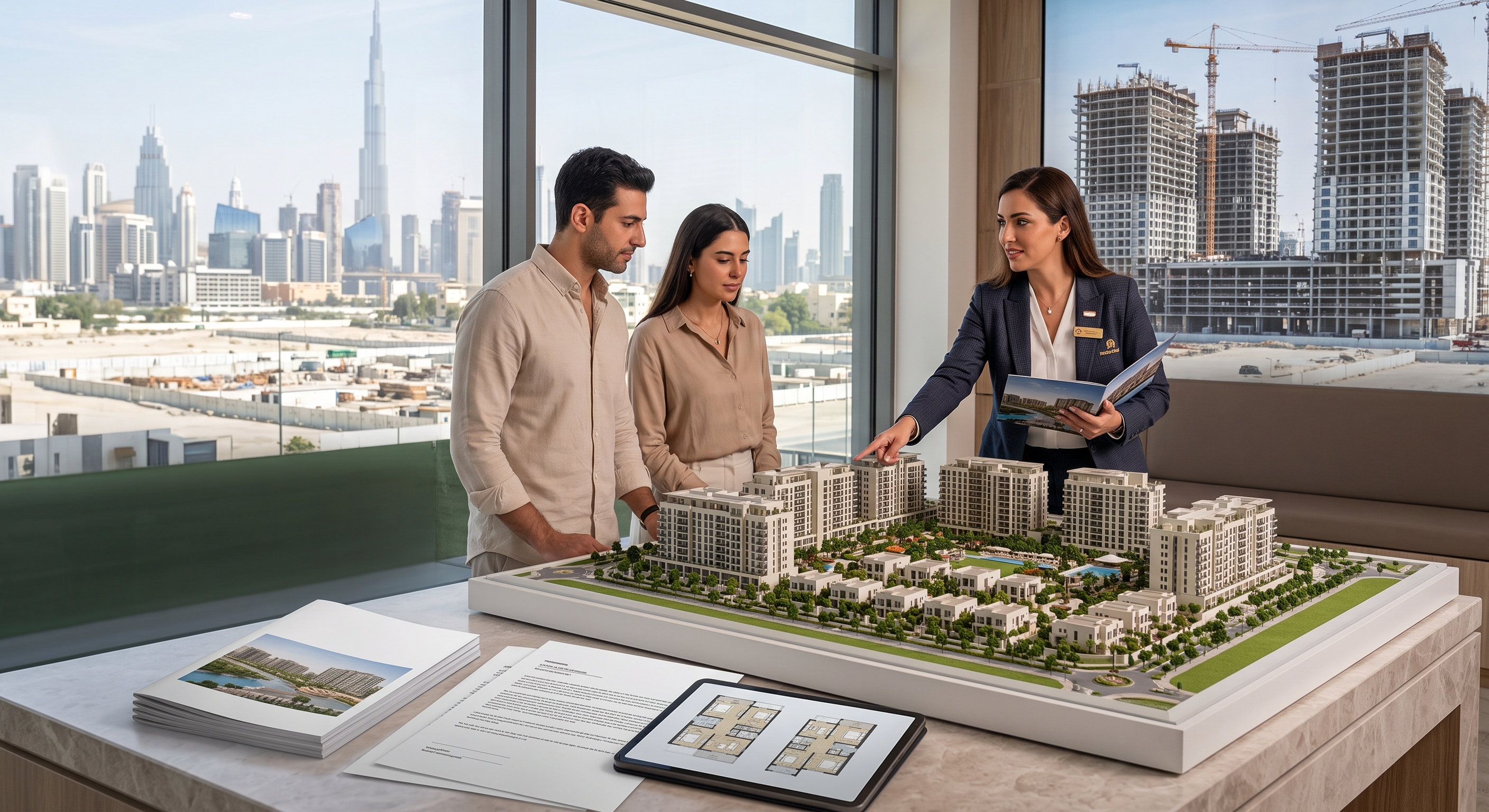
Buying off-plan property in Dubai means purchasing a unit directly from a developer before or during construction. You secure a specific apartment, villa or townhouse at today’s price, pay in staged instalments linked to construction progress, and take possession once the project reaches completion and handover.
Dubai’s regulatory framework—centred on the Dubai Land Department (DLD), the Real Estate Regulatory Agency (RERA), mandatory escrow accounts under Law No. 8 of 2007, and Oqood interim registration—gives buyers strong protections compared with many other markets. This guide explains the full process, costs, risks, payment structures, due-diligence steps and post-purchase considerations in clear, practical terms.
What Is Off-Plan Property in Dubai?
Off-plan property is real estate sold before the building is finished. The buyer and developer sign a Sale and Purchase Agreement (SPA) that locks in the unit, price, specifications, payment schedule and expected completion date. The buyer’s interest is registered in DLD’s interim (provisional) register through the Oqood system. Once the project is completed and the unit is handed over, the Oqood record converts into a full title deed.
Foreign nationals can buy freehold off-plan property in designated freehold areas across Dubai. Popular zones include Dubai Marina, Downtown Dubai, Business Bay, Palm Jumeirah, Dubai Hills Estate, Jumeirah Village Circle, Dubai Creek Harbour and many newer master communities.
Benefits of Buying Off-Plan
Lower entry prices compared with ready stock (often 10–20% below equivalent completed units at launch).
Flexible, construction-linked or post-handover payment plans that spread the cost over several years.
Potential capital appreciation between purchase and handover.
Choice of layout, floor, view and finishes at an early stage.
Eligibility for the UAE Golden Visa once the property meets the AED 2 million threshold (details below).
Strong legal protections via escrow accounts and Oqood registration.
Risks and How They Are Mitigated
Main risks include construction delays, changes in market conditions, and developer performance. Dubai mitigates these through:
Mandatory project-specific escrow accounts (Law No. 8 of 2007) that ring-fence buyer funds and release money only against verified construction milestones.
Oqood registration that records the buyer’s interest and prevents double-selling.
RERA oversight of developers and projects.
Statutory and contractual remedies for significant delays or project cancellation, including refunds from the escrow account.
A 5% retention in the escrow account for one year after completion to cover defects.
Delays remain possible. Most SPAs include a grace period (commonly 6–12 months). Beyond that period, buyers have contractual and regulatory avenues. Always review the specific SPA clauses.
Step-by-Step Process to Buy Off-Plan Property in Dubai
Set your budget and criteria
Decide total budget (including the 4% DLD registration fee and other costs), preferred locations, unit type, size, and whether you want end-use, investment or both. Factor in service charges and potential financing.
Research projects and developers
Shortlist RERA-registered developers with a proven delivery track record. Check project status, completion percentage and escrow details on the Dubai REST app or DLD website. Prefer projects with clear construction progress and transparent payment plans.
Reserve the unit
Sign a reservation or booking form and pay a booking amount (commonly 5–20% or a fixed token of AED 10,000–50,000, depending on the developer). This amount is usually credited toward the purchase price and paid into the project escrow account.
Review and sign the Sale and Purchase Agreement (SPA)
The SPA is the binding contract. Key points to examine carefully:
Exact unit details, floor plan and specifications
Full payment schedule and milestones
Expected handover date and any grace period
Delay penalties or compensation clauses
Variation or substitution rights for finishes
Assignment/resale conditions
Service-charge estimates
Cancellation and default provisions
Consider independent legal review before signing.
Pay the DLD registration fee and complete Oqood registration
The developer registers the SPA in the Oqood system (usually within 60–90 days of signing). The buyer pays the 4% DLD registration fee (typically collected by the developer). You receive an Oqood certificate as official evidence of your registered interest. No second 4% fee is charged when the Oqood converts to a title deed at handover.
Pay construction instalments into the escrow account
All subsequent payments must go into the project’s designated escrow account held at a DLD-approved bank. Funds are released to the developer only after independent verification of construction milestones. Never pay into a developer’s general operating account.
Monitor progress and prepare for handover
Track project status via Dubai REST or the developer’s updates. As completion nears, the developer issues a handover notice. Settle any final instalment, arrange inspection/snagging, activate utilities and complete formalities (see the companion guide on Dubai Property Handover).
Receive keys and convert to title deed
After successful inspection and settlement of outstanding amounts, collect keys and access items. The Oqood registration is converted into a full electronic title deed through the DLD process.
Common Payment Plan Structures
Payment plans vary by developer and project. Typical structures in 2026 include:
All payments (except the separate 4% DLD fee) must flow into the project escrow account.
Costs and Fees When Buying Off-Plan
Budget beyond the purchase price. Typical additional costs:
Agent commission on primary off-plan sales is normally paid by the developer, so the buyer does not pay brokerage. Always request a full written breakdown of fees from the developer before committing.
Buyer Protections
Escrow accounts (Law No. 8 of 2007): Every off-plan project must have its own escrow account. Buyer funds are ring-fenced, released only against verified progress, and protected from the developer’s creditors. A 5% retention is held for one year after completion.
Oqood registration (Law No. 13 of 2008 framework): Creates an official record of the buyer’s interest and prevents the unit from being sold twice. Unregistered off-plan sales are void.
RERA / DLD oversight: Projects and developers must be registered. Buyers can check status on the Dubai REST app or DLD portals.
Defects liability: Statutory protections under Law No. 6 of 2019 (for jointly owned property) plus contractual warranties—typically one year for installations and ten years for structural elements from the relevant trigger dates.
Due Diligence Checklist Before Buying
Confirm the developer is RERA-registered and has a solid delivery record.
Verify the project is registered, has an active escrow account, and appears correctly on Dubai REST / DLD.
Obtain and review the full SPA, payment schedule, floor plans and specifications.
Confirm all payments will go into the named project escrow account (get IBAN and account name in writing).
Check expected handover date, grace period and delay remedies.
Understand resale/assignment rules and any minimum payment threshold for NOC.
Review service-charge estimates and community rules.
Assess location fundamentals, infrastructure plans and comparable pricing.
For financed purchases, confirm bank requirements early (many banks finance off-plan only after a certain construction percentage).
Consider independent legal advice and, closer to handover, a professional snagging inspection.
Off-Plan Property and the UAE Golden Visa
Off-plan property can qualify for the 10-year Golden Visa. As of the February 2026 policy update, the key test is a DLD-certified property value of at least AED 2 million (single property or combined portfolio). The previous requirement to have paid a minimum percentage (such as 50%) has been removed. Off-plan units registered via a valid Oqood certificate from a registered developer can qualify. Mortgaged properties are also eligible subject to bank NOC requirements. Always confirm current eligibility criteria and required documents with DLD / GDRFA or a licensed immigration specialist before relying on any specific property for visa purposes.
Reselling an Off-Plan Unit Before Handover
Most developers allow assignment/resale after a stated payment threshold (commonly 30–50% paid) and subject to a No Objection Certificate (NOC). The transfer is processed through the Oqood system. Fees include the developer’s NOC charge (often AED 500–5,000) and applicable DLD registration fees on the new transaction. Check the SPA for any restrictions or charges.
What Happens at Handover
Once the project reaches the required completion stage, the developer issues a handover notice. You settle any final instalment, inspect the unit (snagging), complete formalities, collect keys and activate utilities. The Oqood record is then converted into a full title deed. For a detailed walkthrough of inspection, costs, documents and post-handover steps, refer to the companion guide: Dubai Property Handover: Procedure, Cost & Checklist.
Frequently Asked Questions
1. Can foreigners buy off-plan property in Dubai?
Yes. Foreign nationals can purchase freehold off-plan property in designated freehold areas. A valid passport is the primary identity document.
2. How much is the DLD fee for off-plan purchases?
The registration fee is 4% of the purchase price, paid at Oqood registration. No second 4% is charged when the title deed is issued at handover.
3. Where do my payments go?
All purchase payments (except the separate DLD fee) must be deposited into the project’s designated escrow account held at a DLD-approved bank.
4. What happens if the project is delayed?
Most SPAs include a grace period. Beyond that, buyers may have contractual remedies. Significant or prolonged delays can be raised with the developer, DLD or through formal dispute channels. Project cancellation by the regulator triggers refund processes from the escrow account.
5. Can I get a mortgage for an off-plan property?
Yes, subject to bank criteria. Many lenders require a minimum construction percentage before releasing funds. Mortgage registration attracts a separate 0.25% fee on the loan amount.
6. Does off-plan property qualify for the Golden Visa?
Yes, provided the DLD-certified value reaches AED 2 million and the unit is properly registered (Oqood). Confirm current payment-stage and documentation rules with the authorities.
7. Can I sell my off-plan unit before handover?
Usually yes, after meeting the developer’s payment threshold and obtaining an NOC. The transfer is registered through Oqood.
8. What documents do I need as a non-resident buyer?
Valid passport (and clear copy), proof of address, source-of-funds documentation, and any power of attorney if someone is signing on your behalf. Additional documents may be requested for compliance checks.
9. Is a professional snagging inspection necessary?
It is optional but strongly recommended. It helps identify defects before you formally accept the unit and start the defects-liability clock.
10. How do I check a project’s legitimacy?
Search the project and developer on the official Dubai REST app or DLD website. Confirm RERA registration, escrow account status and current completion percentage before paying any money.
Buying off-plan in Dubai can be a structured and relatively transparent process when you follow the regulatory safeguards, perform proper due diligence and understand the payment and handover timeline. Always verify current fees, project status and contractual terms directly with official sources or qualified professionals, as details can vary by developer and evolve over time.