Freehold vs Leasehold Property in Dubai: Complete Guide
October 1, 2026
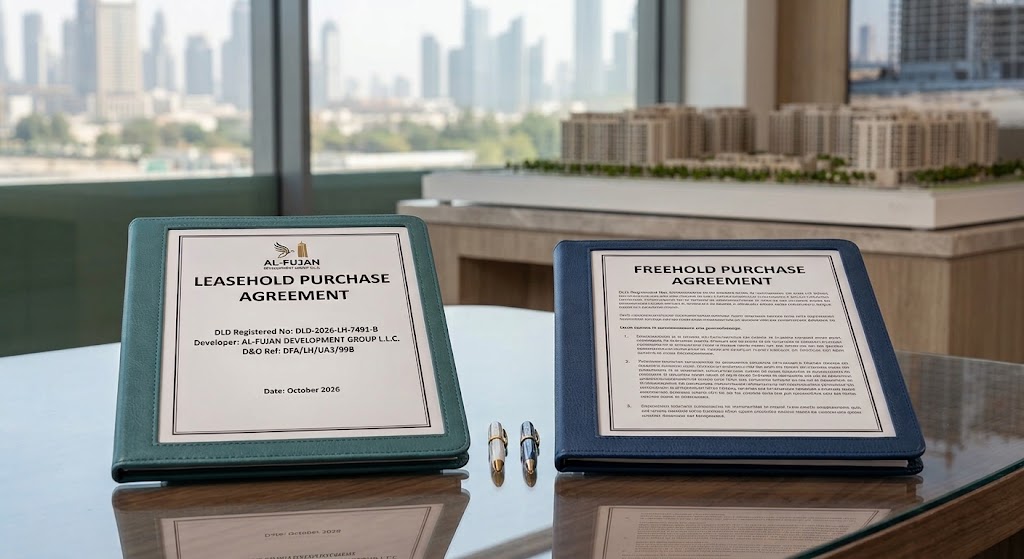
Understanding the difference between freehold and leasehold ownership is essential for anyone buying property in Dubai. These two models define what you actually own, how long you own it, what you can do with it, and how the asset behaves as an investment or family home.
Since Dubai opened designated areas to foreign freehold ownership in the early 2000s (formalised under Law No. 7 of 2006), freehold has become the dominant choice for most international buyers. Leasehold remains available in certain locations and can suit specific shorter-term or location-driven needs. This guide explains both structures clearly, compares their practical implications, and helps you decide which fits your goals.
What Is Freehold Property in Dubai?
Freehold ownership grants permanent, unrestricted title to both the property unit and the land (or the proportional share of the land in the case of apartments and joint ownership schemes). The owner’s name is registered on the Dubai Land Department (DLD) title deed with no time limit.
Key rights include the ability to:
Sell, gift or transfer the property at any time
Lease or rent it out
Renovate or modify (subject to building regulations and community rules)
Mortgage the property
Pass it to heirs
Freehold is available to UAE and GCC nationals across the emirate. Foreign nationals may acquire freehold only in designated freehold areas.
What Is Leasehold Property in Dubai?
Leasehold (often structured as a long-term lease or usufruct right) grants the right to use and benefit from a property for a fixed term, commonly up to 99 years. The underlying land remains owned by the freeholder (often a government entity, master developer or private landowner).
During the term the leaseholder can typically occupy, rent out or sell the remaining interest, but major structural changes usually require the freeholder’s consent. At the end of the term the right reverts to the freeholder unless a renewal is agreed and registered.
Leasehold is more common in older or non-designated neighbourhoods and can sometimes offer a lower entry price.
Freehold vs Leasehold: Key Differences
Legal Framework
Freehold is governed primarily by Dubai Law No. 7 of 2006 concerning Real Property Registration. It provides for permanent ownership rights in designated areas and sets out registration, transfer and dispute procedures through the Dubai Land Department.
Leasehold / long-term rights are also registered with the DLD and can take the form of registered leases or usufruct rights under the broader property and civil code framework. Terms, renewal conditions and restrictions are set out in the specific agreement and the registered title.
All dispositions of real property rights in Dubai must be registered with the DLD to be effective. The title deed (or registered right) is the definitive evidence of ownership or entitlement.
Where Can Foreigners Buy?
Foreign nationals (non-UAE, non-GCC) can acquire freehold only in areas designated by the Ruler of Dubai (originally listed under Regulation No. 3 of 2006 and subsequently expanded). There are now dozens of such communities.
Popular freehold areas include:
Downtown Dubai
Dubai Marina and Jumeirah Beach Residence (JBR)
Palm Jumeirah
Business Bay
Dubai Hills Estate
Dubai Creek Harbour
Jumeirah Village Circle (JVC) and Jumeirah Village Triangle (JVT)
Arabian Ranches and other villa communities
Tilal Al Ghaf, Damac Hills, Motor City, Dubai South and many newer master developments
Leasehold or long-term rights are more typical in traditional neighbourhoods such as parts of Jumeirah, Al Barsha, Al Wasl, Mirdif and older central districts, although the freehold map has continued to expand (including selected conversions in areas such as parts of Sheikh Zayed Road and Al Jaddaf).
Always verify the exact ownership status of a specific plot or unit via the Dubai REST app or DLD records before proceeding.
Pros and Cons
Freehold advantages
Permanent ownership with no expiry risk
Full control and flexibility
Stronger long-term capital appreciation and resale liquidity
Eligible for property-linked residency visas (including Golden Visa at AED 2 million+)
Easier financing and inheritance planning
Freehold considerations
Generally higher purchase prices
Full responsibility for service charges and maintenance
Leasehold advantages
Often lower entry cost
Access to certain desirable locations outside freehold zones
Potentially lower maintenance responsibility depending on the agreement
Leasehold considerations
Finite term and renewal uncertainty
Reduced flexibility on modifications
Weaker long-term value and liquidity as the term shortens
Generally ineligible for Golden Visa
More restricted mortgage options
Investment Perspective
Freehold suits long-term holders, family asset builders and buyers seeking residency options. It typically offers better capital growth and exit flexibility.
Leasehold can work for shorter-to-medium-term strategies focused on location or yield, provided the remaining term is long, the contract is clear, and the price reflects the limitations. As the lease shortens, both value and buyer demand usually decline.
Common Misconceptions
“Leasehold is just renting.”
Incorrect. A registered long-term leasehold or usufruct is a real property right that can be sold and mortgaged (within limits) during its term.“Foreigners can only buy leasehold.”
Incorrect. Foreigners can and do buy freehold in all designated freehold zones.“Leasehold becomes worthless at expiry.”
Value declines as the term shortens, but many leases can be renewed by agreement. Never assume automatic renewal.“Freehold means no ongoing costs.”
Freehold owners still pay service charges and any applicable community fees.
How to Decide
Choose freehold if you want permanent ownership, maximum flexibility, long-term growth, inheritance security or residency eligibility.
Consider leasehold if the specific location is more important than permanent title, the remaining term is long, the price is attractive, and you accept the structural limitations.
In practice, the large majority of international buyers and investors in Dubai prioritise freehold properties in designated zones.
Final Thoughts
Freehold ownership is the clearer, more flexible and more widely preferred structure for most buyers in Dubai’s international market. Leasehold remains a valid option in certain circumstances but carries inherent limitations on duration, control and long-term value.
Before purchasing, always:
Confirm the exact ownership type on the DLD / Dubai REST record
Review the title deed or registered right carefully
Understand any restrictions, service charges and community rules
Seek independent professional advice where needed
The right choice depends on your timeline, budget, location priorities and whether residency or multi-generational ownership is part of your plan.
Frequently Asked Questions
1. What is the main difference between freehold and leasehold in Dubai?
Freehold gives permanent ownership of the property and land (or share of land). Leasehold gives the right to use the property for a fixed term (typically up to 99 years) without owning the land.
2. Can foreigners buy freehold property in Dubai?
Yes, but only in designated freehold areas established under Dubai law. Outside those zones, foreigners are generally limited to long-term leasehold or usufruct rights.
3. Is freehold ownership permanent in Dubai?
Yes. There is no expiry date on a freehold title registered with the Dubai Land Department.
4. What happens when a leasehold term expires?
The right reverts to the freeholder unless a renewal or new agreement is negotiated and registered. Value and marketability usually decline as the remaining term shortens.
5. Do leasehold properties qualify for the Golden Visa?
Generally no. Property-linked residency routes, including the 10-year Golden Visa, require freehold ownership meeting the applicable value threshold.
6. Can I mortgage a leasehold property in Dubai?
It is sometimes possible, but financing is more restricted than for freehold. Lenders assess the remaining term and the nature of the registered right.
7. Are service charges different for freehold and leasehold?
Service charges apply to both. The amount depends on the building or community, not solely on the ownership type. Freehold owners remain responsible for their share of common-area costs.
8. Can I renovate a leasehold property freely?
Major structural or external changes usually require the freeholder’s written approval in addition to any building or community rules.
9. How do I check whether a specific property is freehold or leasehold?
Search the property or plot on the official Dubai REST app or DLD digital services. The ownership type is recorded on the title or registered right.
10. Which is better for long-term investment – freehold or leasehold?
Freehold is generally preferred for long-term capital appreciation, liquidity, flexibility and inheritance. Leasehold can suit shorter-horizon or highly location-specific strategies when the remaining term is long and the price reflects the limitations.